



Revealed: The Reality TV Dating Shows Most Likely to Create Lasting Couples
From whirlwind villa romances to couples getting married the moment they meet, British audiences have watched hundreds of contestants attempt to find “the one” on screen. But once filming ends and normal life resumes, only a small number of those relationships survive.
Angelic Diamonds analysed more than 600 contestants from the UK’s biggest reality dating shows to reveal which programmes are most likely to produce couples that actually stay together.
The results reveal a surprising frontrunner, while one of the UK’s biggest dating shows sits firmly at the bottom of the rankings, with less than a one in 50 chance of finding a lasting relationship through the show.
UK Reality Dating Shows Ranked by Relationship Success
TV Show |
Contestants |
Success Rate (Original Couples in Show) |
Success Rate (Including Couples Post-Show) |
Love Island All Stars |
75 |
21.33% |
- |
Love is Blind UK |
60 |
10.00% |
13.33% |
Married at First Sight UK |
70 |
5.71% |
7.14% |
Love Island UK |
404 |
1.98% |
2.48% |
In other words, contestants on Love Island All Stars are around ten times more likely to find lasting love than those on the original Love Island series.
Surprisingly, Love Island All Stars produces the most successful relationships, with one in five finding love
For a franchise known for short-lived romances, Love Island All Stars is surprisingly the most successful show for finding long-lasting love.
Of the 75 contestants analysed, 16 ended up in a relationship with someone from the show.
That means roughly one in five contestants found love, giving the spin-off a headline success rate of 21.33%.

As of today*, eight couples remain together, including Molly Smith and Tom Clare, Sophie Piper and Joshua Ritchie, and Grace Jackson and Luca Bish from seasons one and two.
However, the figures come with an important caveat. The 2026 series of Love Island All Stars only ended recently, meaning several relationships have not yet faced the usual pressures of everyday life outside the villa.
These couples include:
- Samie Elishi & Ciaran Davies
- Millie Court & Zac Woodworth
- Leanne Amaning & Scott van der Sluis
- Lucinda Strafford & Sean Stone
- Whitney Adebayo & Yamen Sanders
When those newest contestants are removed from the analysis, the success rate drops significantly to 12.24%, with six couples still together from the 49 contestants who appeared in series one and two.
But, even with that adjustment, the spin-off would still be the second most successful show when it comes to finding love.
Love Is Blind UK offers roughly a one in ten chance of finding love
The second most successful show in the analysis is Love Is Blind UK.
Out of 60 contestants, three original couples from the show remain together, giving the programme a success rate of 10% based on the initial matches.
Those couples include Nicole Stevens and Beniah Grunewald, Kieran Holmes-Darby and Megan Jupp, and Jasmine Chamberlain and Bobby Johnson.
Jasmine and Bobby have since taken their relationship a step further, recently welcoming their first child.
The figures improve slightly when relationships that formed after the show are included. For example, Catherine Richards and Jake Singleton-Hill, who did not originally choose each other during the experiment, later formed a relationship after filming ended.
Including them brings the total to four successful couples, increasing the overall success rate to 13.33%.
Getting Married at First Sight proves that starting with a wedding doesn’t always guarantee success
Few dating shows begin with quite the same level of drama as Married at First Sight UK, where couples meet for the first time at the altar.
Yet despite the dramatic premise, the long-term success rate remains relatively low.
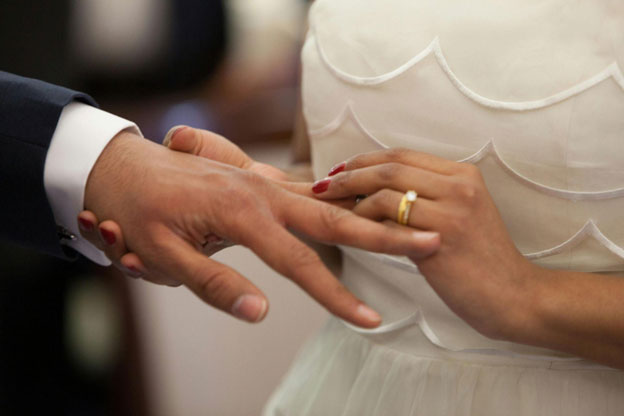
Out of the 70 contestants analysed, four original couples remain together, producing a success rate of 5.71% from the original matches.
Those couples include Adam Aveling and Tayah Victoria, Michelle Walder and Owen Jenkins, Jenna Robinson and Zoe Clifton, and most recently, Abigail Callahan and John Shepard.
Another couple from the show, Shona Manderson and Matt Pilmoor, were not originally matched but later formed a relationship after filming ended.
Including them raises the overall success rate slightly to 7.14%.
Love Island may be the UK’s biggest dating show, but it has the lowest success rate
Despite producing some of reality television’s most famous couples, Love Island UK has the lowest long-term success rate in the analysis.
Across 404 contestants, only eight original couples remain together, giving the show a success rate of 1.98%. That means fewer than one in 50 contestants find lasting love on the show.
When later relationships formed outside the villa are included, the number increases slightly to 12 successful couples, raising the overall success rate to 2.48%.
Even including later relationships, contestants still have less than a one in 40 chance of finding lasting love through the show.
Among the couples who have beaten the odds are Nathan Massey and Cara De La Hoyde, Alex Bowen and Olivia Buckland, and Camilla Thurlow and Jamie Jewitt, all of whom have gone on to marry and have children together.
More recent couples still together include Sanam Harrinanan and Kai Fagan, Jessie Wynter and Will Young, and Lucie Donlan and Luke Mabbott, who met across different series before forming a relationship.
Looking purely at the numbers, Love Is Blind UK currently offers the strongest chance of forming a lasting relationship from the start, with roughly one in ten contestants leaving the show in a couple that is still together today.
For those hoping their reality TV romance might eventually lead to something more permanent, whether that means moving in together or one day wearing an engagement ring or wedding ring, the format focused on emotional connection appears to give couples the best foundation.
Methodology
This analysis was conducted by Angelic Diamonds on 10 March 2026.
Contestant data was compiled from publicly available sources for four UK reality dating shows: Love Island UK, Love Island All Stars, Married at First Sight UK, and Love Is Blind UK.
The total number of contestants who appeared on each programme was recorded, along with the couples that formed during the show and whether those relationships were still ongoing as of the analysis date.
Two success rates were calculated where relevant:
- Original couples on the show refers to relationships formed through the programme’s official matching process.
- Including later couples refers to relationships formed between contestants after filming ended.
Relationships were considered successful if the couple is publicly reported to still be together at the time of analysis.
You May Also Like
Diamond Ring Settings: A Complete Guide to Choosin ...
When most people start shopping for an engagement ring, they focus on ...
Thinking About Proposing This Year? A Calm, Practi ...
Thinking about proposing is exciting, emotional, and a little nerve-wr ...
How to Style Diamonds with Festive Fashion: Sequin ...
Festive outfits tend to fall into two camps — the ‘go big ...
